Looking Back at the Boy Who Was Angry
What a teenage argument with God taught me about acceptance and persistence
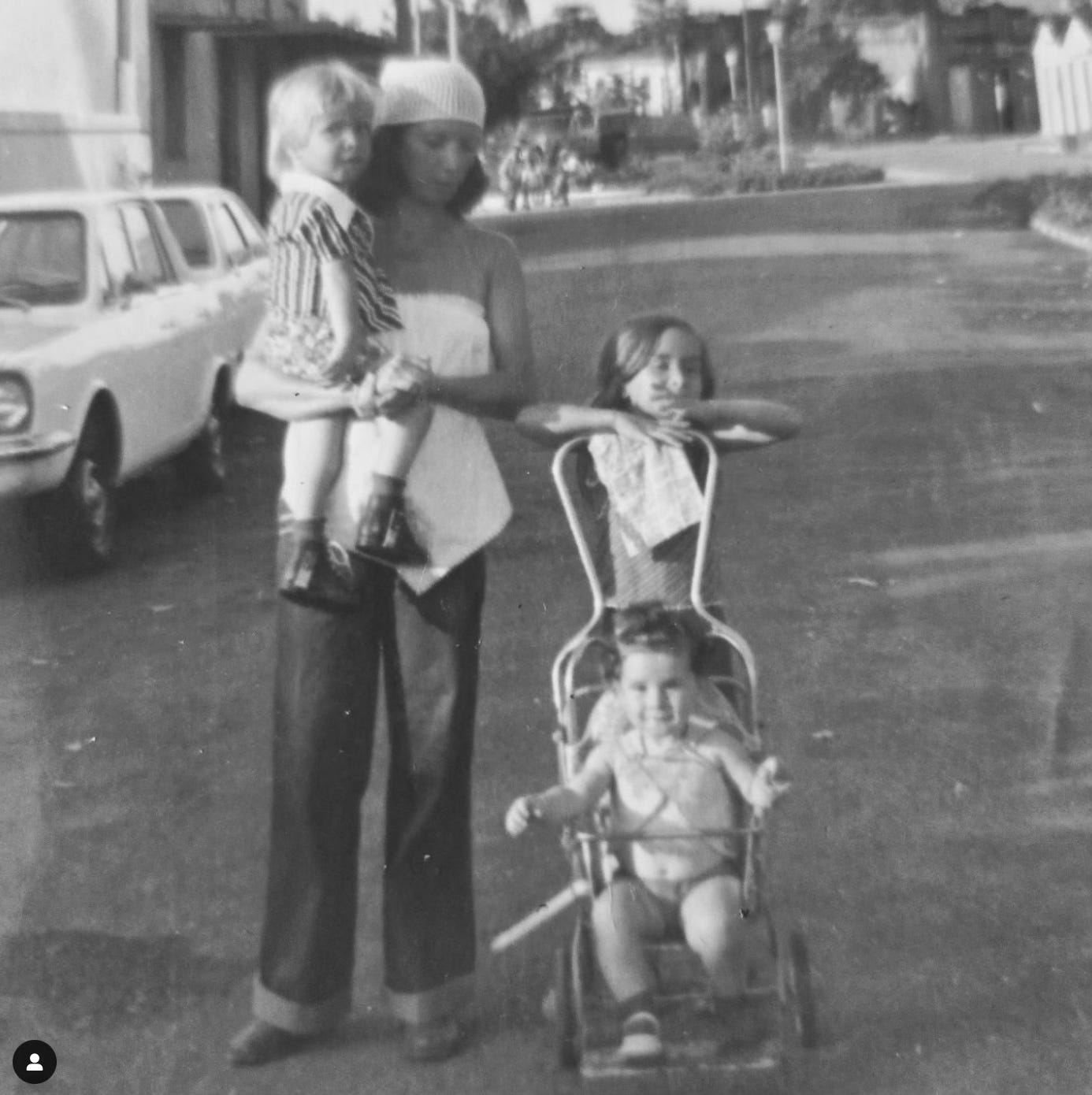
My young mother with me and my two sisters.
Acceptance arrived quietly, long after I stopped looking for it.
A few days ago, a friend and I were chatting — the kind of casual conversation that starts light and slowly drifts into something deeper.
He joked that his family was doing well, but that he was the one falling apart. The humor was still there, but beneath it sat something heavier: years of medical tests, uncertainty, and the quiet suspicion that this might simply be how life was going to be now.
At one point, he said something that stopped me.
He told me he had gone through all the stages — denial, anger, depression — and that he thought he had finally arrived at acceptance. There was nothing left to do but laugh about it, he said. Humor kept him going.
That word — acceptance — pulled me backward in time.
Because acceptance wasn’t something that came easily to me; it had to be fought for.
I was in high school, and I remember one night when I was feeling deeply angry because I believed I would be forever limited by what I could and couldn’t do physically.
I was born with Arthrogryposis Multiplex Congenita, a condition that limited my mobility for many years. Only after multiple surgeries to straighten my arms and legs — and years of wearing a metal brace on my right leg — was I able to move independently by the age of seven. Even then, I relied on a pair of crutches to get around.
I was painfully self-conscious about how I looked. I was the only kid with a metal brace and crutches while everyone else moved through life like they owned it, surfboards tucked casually under their arms.
I lived in a small beach town where, in order to be cool, you had to be a surfer. You had to dress a certain way, walk a certain way. And for me, it was nearly impossible to be physically like all the other guys. Acceptance, for me, was crucial. It was a pivotal moment when I began to realize there was nothing else to do but accept how life was going to be and try to do the best I could.
But that night was remarkable — something I’ll never forget — because I was very angry. It still feels cinematic in my memory. It reminds me of that scene in Forrest Gump where Lieutenant Dan comes back from the war after losing his legs and joins Forrest on the shrimping boat. Right before the big storm hits, he climbs to the top of the mast and challenges God, basically saying, “Send your best.” He wasn’t afraid while Forrest was down below, terrified they were going to sink and die.
That scene reminded me of how I felt that night. While I wasn’t screaming from the top of my lungs like the character in the movie, I did challenge God verbally in front of my friends. I said, “Do your best, because I’m upset at you.” I was really upset. I remember saying, “Why did you do this? Why give me this challenge? Why put me in this position? Can’t you see that I’m miserable? Can’t you see that I’m lonely?” My life didn’t feel like it had a future beyond high school.
Remember, this was a small town. There were no universities nearby, and I couldn’t really see beyond those high school days. I didn’t think college was likely for me, and I felt like I would be stuck in that town forever with only a high school degree, probably working small jobs and making very little money. Most of all, I felt like I would never be able to do what everyone else around me did — skateboarding, surfing, riding a bicycle. Those things felt off-limits to me.
I remember very clearly sitting with my friends that night and how heavily that feeling weighed on me for days afterward. And honestly, I can’t remember exactly when acceptance finally arrived. I don’t know when I reached that point in my life. But eventually, it did. And I learned to do the best with what I had.
Today, many decades later, I have the benefit of hindsight. I can see that my physical appearance or disability were not the factors that determined what I could do with my life. They only could have done so if I had allowed those feelings and emotions to control how I reacted.
Even though I can’t clearly remember when acceptance finally arrived, I do know one factor that shaped how I chose to live: my parents never allowed me to live according to labels other people put on me. While some people assumed I couldn’t do certain things — or tried to make things easier for me — my parents never allowed me to take the easy way out. They knew what I could do and what I couldn’t. They could tell when I was dragging my feet or avoiding things I was capable of doing. In other words, they knew when I was just being lazy and trying to take advantage of situations where people wanted to help me.
They never allowed me to get away with that.
Because of that, I learned to persevere. Every time it felt like I wanted to take the easy way out, there was always a reminder — whether they were physically there or just their words echoing in my mind — saying, “You can do this. Don’t let people do things for you that you can do yourself.”
I carried that attitude with me for the rest of my life. And I can tell you now that I’ve achieved pretty much every goal that that teenager in 1990 hoped for. I’m happily married. I have three daughters. I feel successful in my work. I’ve traveled, met people, and done things that teenager could never have imagined.
It was interesting how having this conversation with a friend brought back those memories from decades ago. And this is something I still try to tell my kids today: it’s important to accept what you have and be grateful for what life has given you. But acceptance doesn’t mean giving up. If something is important enough to you, you keep going. You keep striving. You don’t give up.
At the same time, acceptance matters because it helps you understand what you can and cannot do. And when you clearly see your limitations, that’s where creativity comes in. I believe creativity flourishes when resources are limited and constraints are high.
In many ways, every obstacle I’ve overcome came from feeling constrained — feeling limited in what I could and couldn’t do. But instead of staying angry, like I was that night with my friends on the corner near my house, I eventually learned to accept what I could control and what I couldn’t. Then I did the best thing I could do: I let my imagination take over.
I would come up with a plan. I would try it. If it failed, I went back to the proverbial drawing board. I came up with another idea and kept trying until I found something that worked for me.
For example, it wasn’t until I was 14 years old that I was able to put on a shirt by myself. I could get dressed on my own, but lifting a shirt over my head and pulling it through was something my physical condition simply wouldn’t allow me to do. I remember the day exactly as it happened. This was right around the time I started noticing girls, and I didn’t want them to know that I relied on my parents to get dressed. So there I was, sitting alone in my room, when I had a lightbulb moment: what if I… and off I went, trying something I had just come up with, and triumphantly getting it done despite several unsuccessful attempts.
The same thing happened when I was a senior in high school, contemplating how I would be able to live by myself while away at college if I couldn’t put my socks on — the ultimate and last obstacle preventing me from being completely independent. There I was, sitting in my room by myself — in a different country this time — and then it clicked: what if I had something that could… and several attempts later, I walked around the house wearing the socks I had put on myself.
Acceptance was never the end of the story — it was the beginning of learning how to build a life anyway.
And looking back now, I realize acceptance was never the end of the story — it was the beginning of learning how to build a life anyway. It took frustration, anger, maturity, and learning to become comfortable with who I was and the situation I was in. It took learning how to grow from those experiences instead of letting them define who I could become.