The Winter When the Mill Would Not Ship
A quiet accounting of effort, debt, and the cost of deferred work
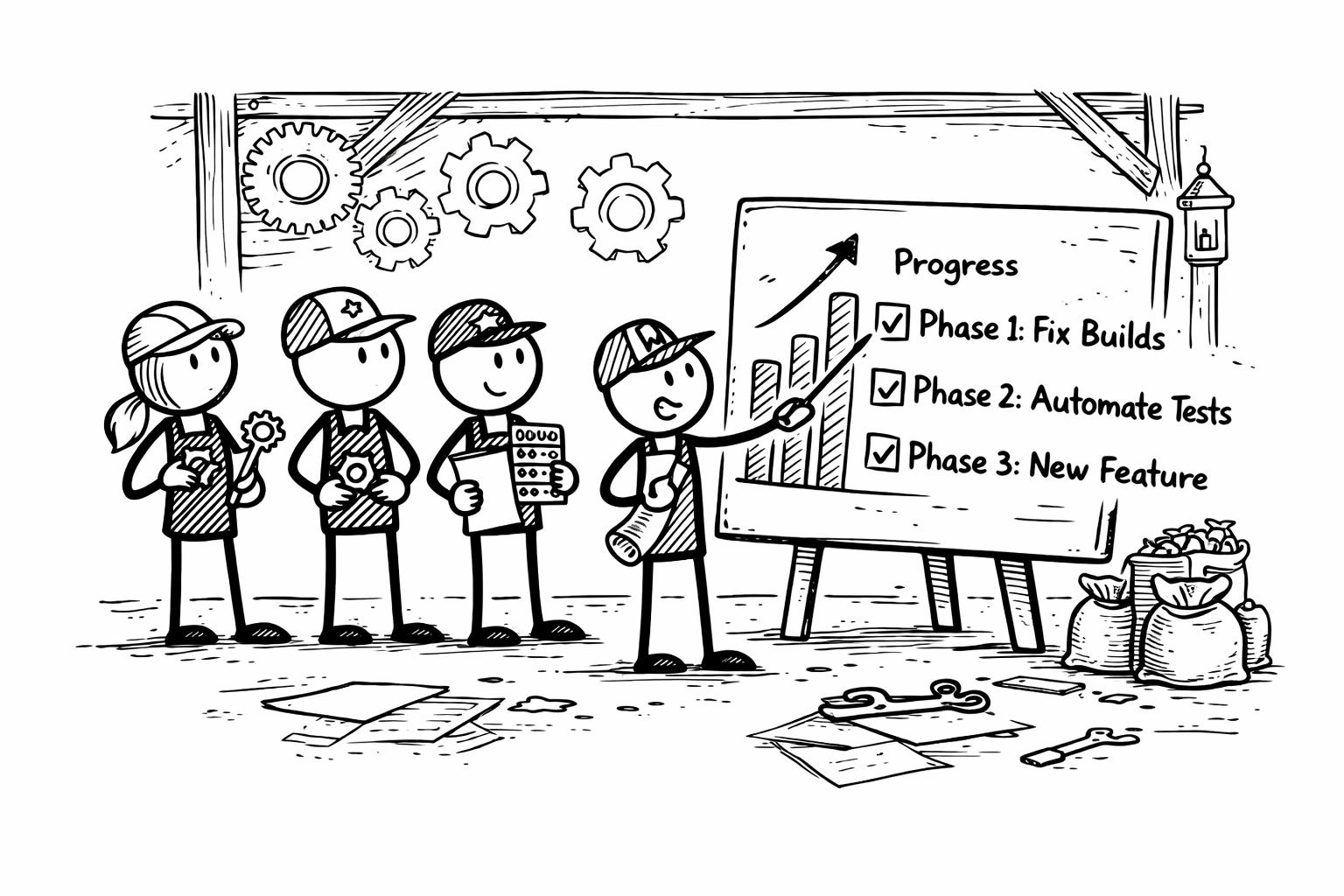
Illustration generated using AI image tools, prompted and directed by the author.
The trouble began during a quiet season.
The estate was celebrating. Fires were low, halls were sparsely staffed, and most of the craftspeople had finally stepped away from the mill to rest. It was understood—unspoken, but widely accepted—that nothing truly urgent would be asked of the machinery during those days. The mill had earned its pause.
Then a messenger arrived.
Not with ceremony, but with urgency. A flaw had been discovered deep in a component the mill depended on—something buried so far inside the mechanism that few outside the mill even knew it existed. The flaw was severe. Dangerous, even. And word of it had not yet spread beyond the estate.
The ask was simple, at least on the surface: replace the flawed part with a safer one, rebuild the machine, and send the goods onward before anyone noticed the weakness had ever been there.
The craftspeople knew how to do this. The replacement itself was straightforward. The flaw was well understood. The remedy already existed.
What no one anticipated was what happened once the lever was pulled.
Each time the mill attempted to run its full cycle, something else broke. A dependency shifted. A supporting gear failed to mesh. Each correction revealed another hidden coupling—each rebuild uncovering a new point of friction. The work became a slow, grinding dance: repair, rebuild, wait… fail… repeat.
A handful of craftspeople returned early from rest to tend the machinery. Mistress Steadwill worked without complaint. Forge-Bearer Swiftroot moved swiftly from problem to problem, breaking obstacles as they appeared. Master Quivver traced fault lines with anxious precision. Apprentice Methodius assisted where he could, watching closely.
Days passed.
By the time the mill finally completed a full cycle, the season of rest had ended. The goods were shipped, tested by hand, and validated through effort that relied more on human patience than mechanical reliability.
When the tower learned what it had taken, concern turned quickly into spectacle.
Meetings were convened. Questions were asked loudly. Judgments were made early. The conclusion, it seemed, had already formed: the mill was not prepared. The craftspeople lacked discipline. The process was fragile.
No one asked why the reinforcements had never been built.
No one asked how a machine once meant as a proof had been pressed, year after year, into service without ever being granted the time to mature.
The Reluctant Steward listened. Explained once. Then stopped.
Instead of arguing, he drew a map.
Not of theories or intentions, but of reality. He charted where every craftsperson’s time had gone. Who had been lent to other mills. Who had been assigned to estate-wide concerns. Who, despite everything, had been left alone to tend the inner workings of their own machine.
The picture was… clarifying.
There was little doubt now: the mill’s weaknesses were well known. The work to address them had been identified long ago. What had been missing was not awareness, but permission.
The tower studied the map.
After some deliberation, a compromise emerged. Two craftspeople would still be pulled away to serve the estate’s broader needs—this, apparently, was unavoidable. The remaining time, however, could finally be used to strengthen the mill itself. Reinforce the build cycle. Reduce reliance on manual hands. Lay the groundwork for a more reliable cadence.
There was one condition.
The mill must not stop producing new goods altogether.
Relevance, after all, was a fragile thing.
So the Steward returned to the map and revised it once more. This time, not just showing constraint, but possibility. A phased plan: steady improvements to the machinery, protected time for process work—and a narrow lane preserved for a new feature the tower still wished to see delivered.
The stakeholders studied this version longer.
In the end, they agreed.
The plan was approved.
This very week, the work would begin.
To lead it, the Steward turned to Apprentice Methodius—not because he was the most seasoned, nor the most orderly, but because he had been waiting for precisely this kind of challenge. An opportunity not just to assist, but to shape. To move from careful observer to accountable driver. To take a meaningful step toward the craft he wanted to master.
Opportunities like that, the Steward knew, rarely announce themselves. They appear when systems strain—and when someone chooses to trust growth over certainty.
The mill now stands at an inflection point.
The gears are still turning.
The plan is in motion.
And somewhere above, the tower is already drafting its next idea—this time about how the mill should automate its turning entirely.
We’ll see how that goes.
Any resemblance to real mills, past or present, is entirely coincidental—and probably unavoidable.