The Day I Didn’t Quit
On Ego, Alignment, and the Power of Pausing Before You Leap
 The Day I Didn’t Quit
After working for 2.5 years as a consultant at a governmental agency in New York as a software engineer, I took advantage of the fact that my position was eliminated after a silly argument with my then-manager and started looking for something new. My wife and I were expecting our second daughter, and the thought of continuing with the same schedule and routine I’d had for the last 2.5 years felt unbearable—something I simply wasn’t willing to do anymore.
At the time, we lived in northern New Jersey, only 11 miles from my office in Long Island City, New York. Despite the short distance, the commute was torturous and detrimental to our mental health—not to mention our family life. Every morning started painfully early. If I wasn’t out the door by 7:00 a.m., it was already too late because of traffic.
Every day was a new routine, a new gamble. Based on traffic reports and whatever chaos had unfolded in New York City overnight, I would choose my route in hopes of arriving at work on time. After 2.5 years of this, I had learned the hard way that the only viable solution to get my wife to work and my daughter to preschool on time was to bring our daughter with us.
There simply weren’t any preschools open before 7:00 a.m. For a short time, I convinced one near our house to open earlier just so I could drop her off. That meant she was the first child to arrive—before 7:00 a.m.—and the last to be picked up, often close to 7:00 p.m.
Even now, years later, thinking about the stress she must have endured—spending nearly 12 hours a day at school, being the first dropped off and the last picked up—still hurts.
Eventually, she began commuting with us. Every morning we left together, dropped her off near my office in Long Island City at a reasonable hour, and picked her up on the way home. It was the best solution we could manage at the time.
When I found myself without a job, I began looking around. Eventually, I landed an opportunity at a startup in North Carolina. The interview process alone—while still living in New Jersey—could fill its own chapter. I captured part of that story in my first book on quality engineering, so I won’t repeat it all here.
Suffice it to say, I joined the startup as a Python developer, even though my only real experience with Python came from a personal project and my involvement in open-source communities. I worked at that startup—rPath—for 5.5 years.
As I approached the five-year mark, I began feeling anxious about my future. I also started feeling unacknowledged for the long hours and effort I poured into my work. The truth is, I was tired. I worked brutal hours—often weekends—and during major release cycles it wasn’t unusual for me to work until 3:00 a.m., go home, and return again at 7:00.
Still, I had drunk the Kool-Aid. I loved the technology, and I was comfortable in my role. I started as a software engineer, but eventually transitioned into quality engineering. At first, I was the only person in that role. As we grew, we hired an exceptional quality engineer—someone with far more experience and a deep mastery of the craft.
Around five years in, I started feeling underappreciated—and if I’m honest, a bit entitled. I had survived two rounds of layoffs. I’d been there longer than most. I was also jealous of the new hire. He clearly had deeper domain expertise, and it was obvious in discussions around automation and release cycles that he brought knowledge I didn’t yet have.
That realization embarrassed me. I knew the technology inside and out, but he knew the discipline better than I did. I wasn’t comfortable with that gap.
I suspect it made leadership uncomfortable as well—figuring out how to build a team around someone newer and more skilled while I remained the more senior, opinionated presence.
To complicate matters further, I had a strong hunch that the newly hired CEO was there to flip the company—to make a quick exit. The optimism surrounding a potential acquisition felt forced. It seemed like time and money were running out.
So I started looking elsewhere.
I interviewed at a local company seeking a quality engineer to establish best practices, improve release processes, and help shape their software lifecycle. The interview was fun. The people made me feel seen—and valued. It felt like a clean slate, a place where I could contribute immediately without worrying about hierarchy or comparison.
They made me an offer. It came with slightly more money, but more importantly, with validation. Without thinking too deeply, I accepted—and submitted my resignation on a Friday afternoon.
My manager and the CEO were shocked. They hadn’t seen it coming. I was one of the last five senior engineers still around from my start date. They accepted my resignation quietly.
I packed my things, gave my two weeks’ notice, and got into my car to drive home along I-40.
Traffic was slow—thankfully. It gave me time to think.
And that’s when it hit me.
The offer was interesting, but I couldn’t see myself working on anything other than the technology I’d spent the last five years immersed in. I had drunk the Kool-Aid. There was comfort in familiarity. Comfort in knowing the people, the systems, the rhythm.
Anyone who’s stayed in the same role long enough knows how hard it is to overcome that inertia—the resume updates, the interviews, the anxiety of being the new person all over again.
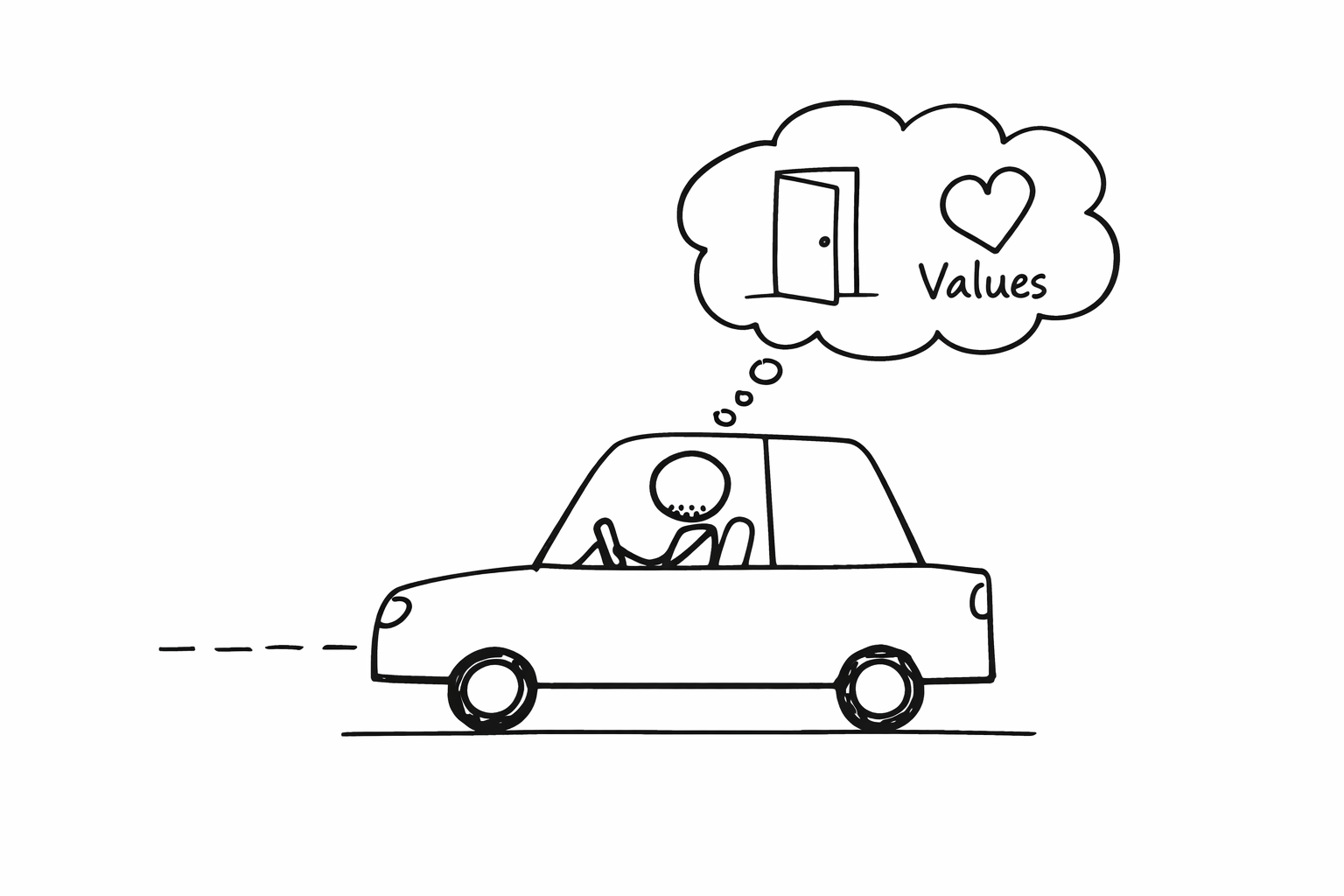
But more than that, I realized something deeper: what I was doing at rPath still aligned with my values. I still had so much to learn—especially from the very person I felt threatened by. He had become a close friend, and I was learning from him every day.
The truth was uncomfortable: my decision to quit had been driven by insecurity and anxiety, not clarity.
Sitting in traffic, the realization landed like a punch to the gut.
I had made a mistake.
Panic set in. I had already resigned. The CEO had accepted my letter.
Acting on impulse again—but this time with honesty—I called the CEO. I told him what had just unfolded in my head. I admitted I’d made a mistake and asked if he would consider shredding my resignation.
He listened calmly. Then he suggested something admirable: that I take the weekend to think it through, talk with my wife, and come see him first thing Monday morning. If I still felt strongly, he said, we’d figure it out.
Relief washed over me.
That weekend, my wife listened patiently as I explained everything. She understood—and supported my decision.
Monday morning, I walked into the office with my head down, embarrassed and ashamed. I explained my reasoning again, honestly. I spoke about believing in the technology, the people, and my desire to keep learning.
The CEO pulled my resignation letter from his desk and tore it up in front of me.
We treated it as if it had never happened.
Only my manager and the CEO had known. I went back to my desk, opened my laptop, and picked up where I’d left off on Friday.
The lesson I carried from that day still stays with me: it’s easy to be tempted by the shiny new thing. Easy to let ego and emotion drive decisions.
But the most important thing is alignment—doing work that matches your values, challenges you, and helps you grow.
I stayed another six to seven months. I learned more than I ever expected. Eventually, Red Hat came calling with an opportunity I couldn’t refuse.
But that place—those people, those long hours—shaped me.
It’s where I built the foundation that carried me through the next 14 years of my career.