Tracing the Edges of My Ikigai: What I’m Good At
Lessons from feedback, fire drills, and the quiet work of helping people find clarity
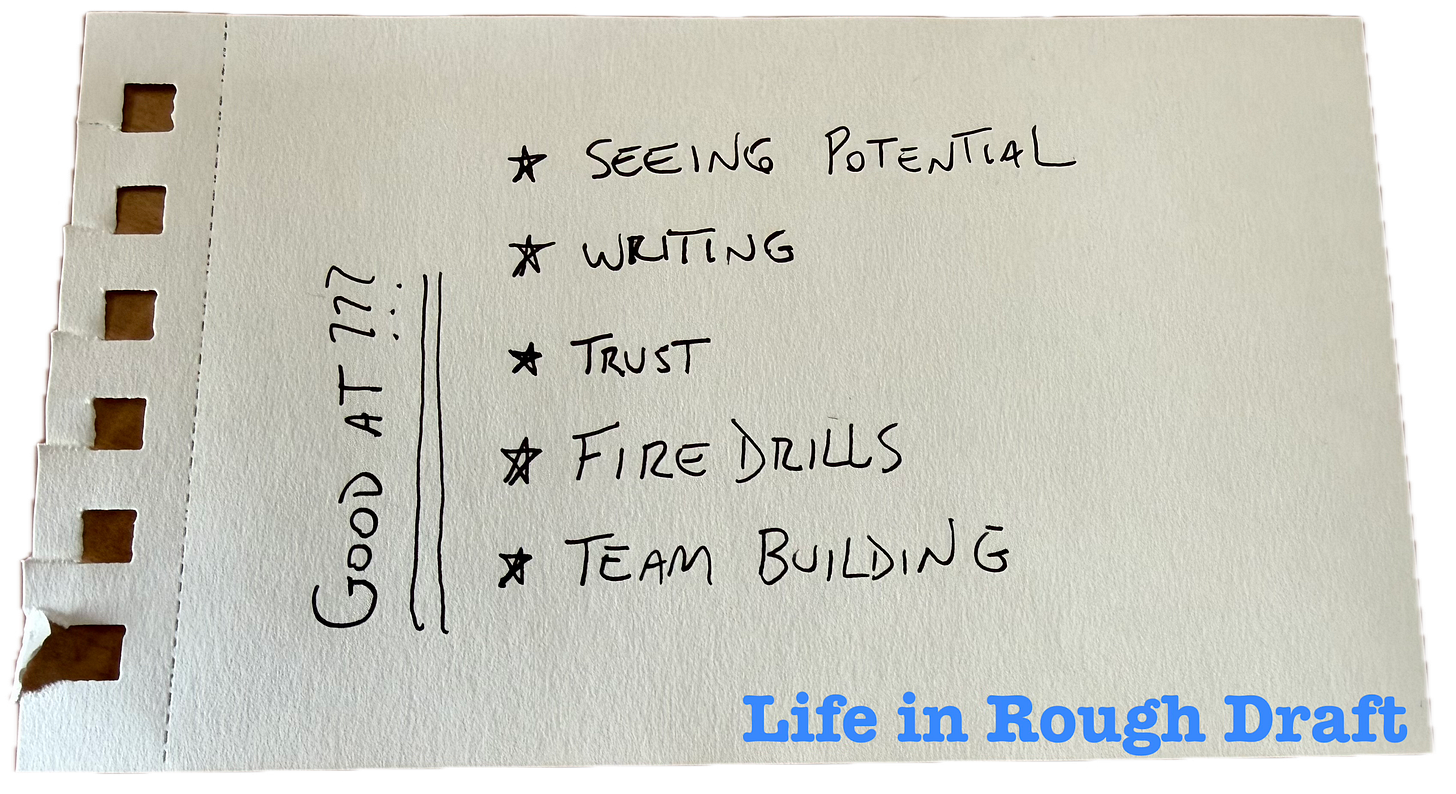 What I’m Good At
I’m officially done with work for the year.
This past Friday wrapped things up cleanly—no loose ends, no unfinished tasks—and I now have two full weeks ahead of me. Some of that time comes from the usual year-end shutdown, some from time off I’d accumulated. All of it feels intentionally quiet.
I’m hoping for long stretches of reading, thinking, resting, watching some TV, reading even more books, and—inevitably—reflecting on what I want the next year to look like.
Before stepping away, I did something I tried to do for the first time: I cleared my calendar and made myself available. I volunteered to talk to anyone and everyone about anything and everything. Not with an agenda—just to listen.
I did it deliberately. The holidays can be hard. Loneliness is real. And sometimes people don’t need solutions; they just need space to be heard.
Many of those conversations drifted toward familiar territory:
What should I do next year?
Am I on the right path?
Why does my work feel disconnected from who I am?
And over and over again, I noticed the same undercurrent:
People are craving something deeper—work that feels connected to who they are, what they care about, and what they’re genuinely good at.
I lost track of how many times the word Ikigai came up in those conversations.
If you read my previous post, you know I’ve been using Ikigai—the idea of a “reason for being”—as a framework for my own reflection. I shared the first quadrant, what I love , along with the first five questions and my unfiltered answers. Even without much public feedback, enough people reached out privately that I decided to keep writing this journey as I move through the remaining quadrants.
So today, I want to share the next five questions , focused on the second quadrant:
What am I good at?
These were the questions I sat with:
What skills have others consistently recognized or praised me for?
What feels easy or natural to me that seems hard for others?
What accomplishments am I most proud of?
What kinds of problems do people regularly come to me for help with?
What could I confidently teach or talk about with little or no preparation?
Some honest answers
Once again, I resisted the temptation to answer quickly. And once again, what surfaced had less to do with technical skills than I initially expected.
Over the years, people have described me as empathetic and supportive—someone who encourages others and takes their growth seriously. More than once, I’ve been told I’m a leader people want to follow, not because of authority or title, but because of trust. That distinction mattered to me more than I realized at the time.
A recurring theme in the feedback I’ve received is persistence. I don’t give up easily. I don’t half-ass things. When I commit to something—whether it’s a team, a project, or a person—I tend to stay with it long after the novelty wears off. I’m always trying to keep my skills relevant, always learning, always adjusting.
I’ve also learned that I’m unusually comfortable in situations others find unsettling. Fire drills don’t paralyze me; they sharpen my focus. When things get messy—when priorities are unclear, tensions are high, or the path forward isn’t obvious—I instinctively move toward structure and calm. Not control, but orientation. Helping people understand what matters now and what comes next.
That same pattern shows up in the kinds of problems people bring to me.
Most don’t come asking for technical answers. They come when they’re struggling with a conversation they don’t know how to have—negative feedback, career uncertainty, interpersonal conflict, self-doubt. Others come when they’re considering a new role or a career change and need help untangling what they’re feeling from what they think they should feel. Over time, I’ve come to recognize these as “crucial conversations,” and it seems to be an area where people genuinely trust me to help them think clearly.
On the technical side, the throughline is still clarity.
I’m good at automation. I’m good at simplifying complex systems. I’m good at building tools and frameworks that outlive my involvement. I’m good at writing—especially when the goal is to make something understandable that previously wasn’t. And increasingly, with AI as a collaborator, I’ve found ways to capture ideas in a raw, stream-of-consciousness form and refine them without losing their original intent.
When I asked myself what I could confidently teach with little preparation, the answers felt telling: building better software systems, using automation thoughtfully, getting started with writing, finding motivation to read or learn when time feels scarce. All of them orbit the same idea—momentum. Helping people get unstuck.
What I’m proud of
This question slowed me down the most.
I’m proud of the software systems and frameworks I’ve built that continued to deliver value long after I moved on. I’m proud of the three books I self-published—not because of numbers, but because finishing them required showing up consistently when no one was watching.
I’m proud of the engineers I helped bring into teams who might not have had the same opportunities otherwise—people whose communication skills or interview polish didn’t reflect their actual ability. Many of them didn’t just meet expectations; they surpassed them. Some have gone on to become key contributors and leaders in their own right. A few have told me—quietly or publicly—that my belief in them changed how they saw themselves. I don’t take that lightly.
I’m proud of the teams I’ve helped build—teams that started under difficult circumstances and became high-performing not through pressure, but through trust and shared purpose.
And on a more personal level, I’m proud of overcoming physical challenges early in life, of becoming a father to three daughters, of building financial independence, and of maintaining relationships rooted in mutual respect and honesty. I’m proud that when obstacles showed up—professionally or personally—I didn’t retreat. I adapted.
What surprised me
What surprised me most wasn’t what I’m good at—it was what it’s all in service of.
A pattern emerged that I hadn’t fully articulated before: much of my skill set revolves around helping people see themselves more clearly, especially when systems, roles, or environments make that difficult.
I seem to be good at spotting potential that isn’t obvious on paper.
I seem to be good at creating safety where people can admit what they don’t know.
I seem to be good at building teams that outperform expectations—not through pressure, but through clarity, trust, and shared intent.
Looking back, this explains more of my career than any title ever did.
When my role allowed me to do this kind of work—develop people, build trust, create clarity—I thrived. When the work drifted toward politics, power dynamics, or abstraction away from humans, something inside me resisted. Sometimes quietly. Sometimes loudly.
Some early pondering
This quadrant forced me to confront a subtle but important question:
Am I using what I’m good at in service of what I actually value?
That’s not a comfortable question—but it’s a necessary one.
I don’t have final answers yet. I’m still working through the remaining two quadrants. But this step alone sharpened my thinking. It helped me understand not just where I’ve been effective, but why certain environments energized me while others slowly drained me.
If you’re reading this and feeling that familiar end-of-year restlessness, I’d encourage you to try this exercise yourself. Not quickly. Not performatively. Just honestly.
There are still two quadrants to go. I’ll keep writing as I work through them—with the hope that somewhere in this reflection, you might find language for questions you’ve been carrying too.