A Writer’s Best Friend? A Proper Keyboard
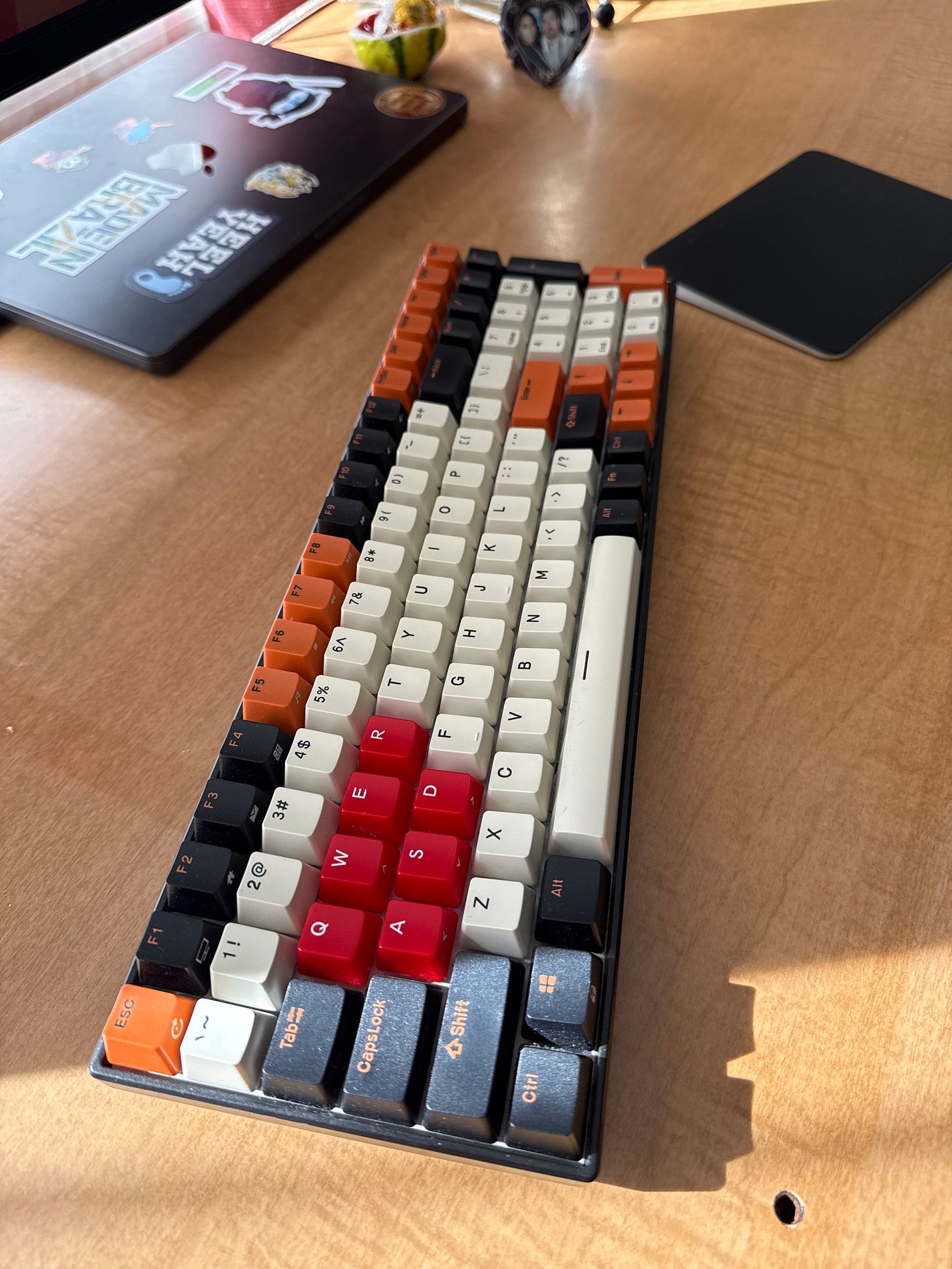
I’m a bona fide computer geek and have been one for quite some time. I guess the fact that I started using Linux back when just getting the X Window Server up and running (for those who don’t know, that’s what lets you have a graphical interface instead of a blinking command line) was considered unnecessary—but still required what felt like a PhD to configure—instead of simply using Windows “like everyone else,” might have been a dead giveaway.
I absolutely loved being able to choose and control every component and application on the computer I had built myself, piece by piece, curated with care. I could configure it to look and behave exactly how I wanted. It was liberating. But back then, recommending Linux to the faint-of-heart was… not something you did lightly.
Things are much better today. Installing and configuring Linux on modern hardware is pretty trivial—though printers may still be the bane of Linux desktop users everywhere. Getting a printer to “just work” used to earn you a badge of honor and probably a brief stay in a quiet room to reintegrate back into society.
Computer nerds love to share and compare their setups: dotfiles, themes, wallpapers, command-line tricks, and—perhaps most passionately—their keyboards. If you ever want to hear a computer person talk uninterrupted for an hour, ask them which keyboard they use. Then sit down, hydrate, and enjoy the ride.
And I think anyone who spends hours typing—novelists, short-story writers, essayists—may share that same bond with their keyboard that software engineers, sysadmins, and code slingers do.
Today, toward the end of a software-engineering call, a good friend spoke up right before we hung up and asked if we wanted to see something he’d gotten “a little obsessed with lately.” We were curious. He’s well known for being a brilliant developer, but he’s a private person, so seeing his passions outside code is always fun.
He shared his screen and pulled up a boutique mechanical keyboard site. For the next twenty minutes, everyone on the call chimed in about their favorite keyboards. For the one person who didn’t yet own a mechanical keyboard, the rest of us collectively tried to convert him like a group of overly enthusiastic evangelists.
There’s just something about the feel and sound of a mechanical keyboard that a standard one can’t replicate. As a former full-time engineer—and someone who still tinkers with little side tools and apps to simplify life—but especially as an aspiring writer, something magical happens when I switch to a mechanical keyboard. My fingers start dancing. Words flow differently. Ideas seem to have weight and texture. It’s hard to quantify, but I feel it every time.
More than once, during a bout of minimalism-inspired decluttering, I’ve thought about simplifying my workspace and relying solely on my laptop. But then I imagine giving up my mechanical keyboard, external monitor, and peripherals, and suddenly I’m dragging myself back—kicking, screaming, slightly annoyed at my attachment—but back nonetheless. Because I’m afraid I’d lose the creative spark that seems to show up only when my fingers meet those wonderfully clacky keys.
What can I say? I’m a nerd at heart, and I don’t think I’ll ever give up my mechanical keyboard… unless it’s for another one.